
Questo post potrebbe contenere link di affiliazione. Potremmo guadagnare denaro o prodotti dalle aziende menzionate in questo post.
 © Depositphotos.com / jeanro
 Penso che sarai d'accordo con me quando dico:
Una delle prime e più importanti cose che devi imparare come nuovo proprietario è come addestrare un cucciolo in casa... e velocemente!
Bene, a quanto pare puoi ridurre drasticamente il tempo necessario per addestrare il tuo cucciolo in casa, superando molto prima i giorni in cui pavimenti e tappeti erano più puliti, armandoti solo di un po' di conoscenza e seguendo un piano ben strutturato.
E in questo articolo ti fornisco un metodo dettagliato passo dopo passo da seguire per addestrare il tuo cucciolo nel minor tempo possibile, con il minor numero di "incidenti", disordine e pulizia lungo il percorso.
Non prometto nessuna "pillola magica". " o "segreto dell'addestramento in casa". ‘ questo farà addestrare il tuo cucciolo in una settimana. Non esiste un segreto del genere e il tempo necessario sarà diverso da cucciolo a cucciolo e da proprietario a proprietario.
Ma quello che offro è una guida completa, scritta grazie a innumerevoli ore di ricerca e alla mia esperienza di formazione domestica, che mi ha insegnato cosa funziona e cosa non funziona.
Se segui questa guida con pazienza, coerenza e dedizione, posso garantire che porterai te stesso e il tuo cucciolo da principianti assoluti ad esperti dell'addestramento domestico il più rapidamente e senza stress possibile.
SUGGERIMENTO RAPIDO: Per contribuire a ridurre il numero di incidenti in casa, assicurati di rimuovere completamente l'odore dell'urina. Consigliamo un detergente enzimatico come Puppy In Training Stain &Odor Eliminator.
"Come addestrare un cucciolo in casa " è l'undicesimo articolo della mia serie "Guida definitiva all'addestramento in casa".
I 10 articoli precedenti contengono numerose informazioni di supporto che rispondono a molte delle domande più comuni sull'uso del vasino e forniscono le conoscenze necessarie per prendere decisioni informate sul metodo e sullo stile di addestramento al vasino che seguirai.
Tuttavia, ho creato appositamente questo "come fare". ‘ guida il più completa e autonoma possibile, quindi leggere gli articoli precedenti non è essenziale.
Ripeto qui le informazioni più importanti in modo meno dettagliato, quindi collega a tali articoli se desideri una lettura più dettagliata e una comprensione più approfondita.
Per utilizzare questa guida, ti consiglio di leggerla completamente dall'inizio alla fine, dopodiché avrai coperto tutto ciò che devi sapere per addestrare con successo un cucciolo in casa.
Ti avverto, questo articolo è lungo. Molto lungo. Probabilmente ti ci vorranno 15 minuti per leggerlo. Ma ciò che imparerai, ovvero il modo migliore per addestrare un cucciolo in casa il più velocemente possibile, ti ripagherà del tempo investito centinaia di volte nelle prime settimane e mesi con il tuo cucciolo.
E se aggiungi questa guida ai segnalibri puoi usarla come riferimento facendo clic sul sommario sopra per portarti direttamente a qualsiasi sezione se hai bisogno di rinfrescarti la memoria su un argomento particolare.
Quindi cominciamo...
RACCOMANDAZIONE RAPIDA: Un altro strumento che amiamo per l'addestramento domestico è il campanello per il vasino del cane, Smart Bell. Ci vuole un po' di allenamento, la Campana Intelligente ti avvisa quando il tuo cucciolo deve usare il vasino ed è fantastico anche quando lavori sul segnale “Touch”.
A 8 settimane, un cucciolo non sa niente di meglio che fare pipì o fare la cacca ovunque si trovi quando ne ha voglia.
Non hanno idea che non è così che dovrebbe essere fatto o che non trovi accettabile usare il vasino sui tappeti.
Sta a te scegliere un posto appropriato per il bagno, addestrare il tuo cucciolo ad usarlo e allo stesso tempo insegnargli che non è accettabile usare il vasino in nessun altro posto della casa.
Per raggiungere questo obiettivo ci sono 2 chiavi essenziali per il successo. 2 chiavi che sono l'obiettivo finale di qualsiasi metodo o tecnica che incontrerai mai:
Gran parte del raggiungimento di questo obiettivo è semplicemente portare spesso il tuo cucciolo al bagno designato.
In questo modo ottieni il maggior numero di opportunità per lodarli per aver fatto la cosa giusta. E poiché sono vuoti, riduci anche la loro necessità di usare il vasino quando si trovano nei posti sbagliati.
Ma non è così semplice. Devi anche prevenire errori a casa tua attraverso una combinazione di confinamento e supervisione concentrata. E adatta questa attività 24 ore su 24, 7 giorni su 7 al tuo stile di vita e alle tue routine attuali.
Fare questo è sia un'arte che una scienza, e richiede un approccio ben pensato e altamente pianificato per dare al tuo cucciolo la massima possibilità possibile di fare la cosa giusta, limitando al contempo le opportunità di fare la cosa sbagliata.
E questa guida ti mostrerà esattamente come.
Per quanto tempo un cucciolo può trattenere la vescica? Quante volte al giorno un cucciolo deve usare il vasino? Quanto tempo ci vorrà prima che il tuo cucciolo sia completamente addestrato a casa?
Ci sono molte domande che un proprietario avrà quando inizia la formazione domestica e c'è molta disinformazione scritta là fuori.
Quindi, per rispondere alle domande più frequenti, ho scritto il seguente articolo:È necessario conoscere i fatti prima di iniziare.
Ti consiglio di leggere quell'articolo in modo da avere aspettative realistiche nei confronti del tuo cucciolo e di te stesso, per sapere cosa potete ottenere entrambi in quale lasso di tempo.
 © Depositphotos.com / nasirkhan
 Poiché il tuo cucciolo non ha idea di cosa gli stai chiedendo di fare o perché, tu sei la parte più importante nel processo di addestramento in casa.
Spetta a te insegnare loro abitudini igieniche accettabili e devi farlo in un modo che sia il più semplice possibile per loro da comprendere e senza stress.
Il modo in cui affronti le cose avrà un effetto drammatico sul modo in cui andranno le cose, tanto che ho dedicato un intero articolo alla questione:La mentalità e l'approccio che devi adottare per la formazione in casa.
Nell'articolo discuto i metodi tradizionali che non dovrebbero mai essere utilizzati, perché non dovrebbero e cosa dovresti fare invece.
Spiegherò come devi assumere il ruolo di guida e formatore, devi essere paziente e comprensivo, ma allo stesso tempo fermo e coerente.
Ti spiegherò come lavorare con gli istinti naturali del tuo cucciolo, il modo migliore per affrontare gli incidenti domestici e come l'addestramento all'uso del WC getta le basi della vostra futura relazione insieme.
È una lettura importante per chiunque stia per intraprendere un programma di formazione domestica, quindi ti consiglio di leggerlo prima di continuare con questa guida.
Limitare l'accesso del tuo cucciolo alla tua casa finché non ci si può fidare di lui è una delle cose migliori che puoi fare per un percorso più rapido e pulito verso il successo.
I cani hanno l'istinto di non fare i bisogni all'interno della tana, il luogo dove mangiano e dormono. Il tuo compito è convincere il tuo cucciolo che tutta la casa è la sua tana e che non dovrebbe sporcare da nessuna parte al suo interno.
Questo è molto più semplice da fare se inizialmente limiti il tuo cucciolo a una sola stanza della tua casa, lo convinci a mantenerlo pulito prima e poi espandi lentamente le aree in cui gli è consentito.
I cani non generalizzano bene, quindi anche se sanno che non dovrebbero usare il vasino in cucina, non prenderanno questa idea e non la applicheranno alla tua camera da letto.
Devi insegnare loro a non usare il vasino in camera da letto quasi come un'idea separata.
Se consenti subito l'accesso a tutta la casa, il tuo cucciolo non la vedrà come un unico grande posto, ma come tanti luoghi separati e completamente diversi.
Ma se inizi in piccolo, limitandoli a usare il vasino in un'unica area e poi espandendoti poco a poco, sarà più facile per il tuo cucciolo associare la nuova area con il suo spazio vitale che dovrebbe tenere pulito.
Ciò accelererà il processo di sfondamento della casa e allo stesso tempo ridurrà il numero di incidenti che avrà il tuo cucciolo e il numero di pulizie profonde che dovrai fare. Una situazione vincente secondo chiunque!
 © Depositphotos.com / tairen10
 Di seguito è riportato un elenco di articoli e prodotti di cui avrai bisogno per aiutarti ad addestrare il tuo cucciolo ad andare in bagno.
Alcuni sono essenziali, altri sono facoltativi e ciò di cui hai bisogno dipenderà dal metodo scelto.
Sarai in grado di determinare di cosa hai bisogno una volta terminata la guida e conosciuto il tuo piano d'azione.
Se desideri una descrizione dettagliata di come e perché questi articoli sono così utili, come dovrebbero essere utilizzati e come aiutano durante la formazione domestica, consulta il mio articolo:
Prodotti, forniture e attrezzature necessarie per la formazione domestica
 © Depositphotos.com / belchonock
 Ciò che dai da mangiare e come dai da mangiare al tuo cucciolo ha un impatto incredibile sul processo.
Ho scritto un articolo dettagliato su come le scelte alimentari fanno un'enorme differenza durante l'addestramento in casa, che puoi leggere cliccando qui.
Contiene una discussione dettagliata sull'influenza che le tue scelte alimentari avranno sul tuo successo e molti consigli su come nutrire il tuo cucciolo.
Naturalmente ti consiglio vivamente di leggerlo, poi potrai tornare informato e saltare questa sezione per la successiva. Ma per chi ha poco tempo, i punti principali dell'articolo sono i seguenti:
Il cibo di bassa qualità è pieno di riempitivi economici, ha un basso valore nutrizionale ed è difficile da digerire, con conseguente passaggio in quantità maggiore.
Mentre il cibo di alta qualità è ricco di nutrienti, è facilmente digeribile e ne viene assorbito di più, il che significa che ne passa meno.
Pertanto, un alimento di alta qualità fa sì che il tuo cane produca meno feci ogni giorno, il che è ovviamente l'ideale durante l'addestramento in casa.
Poiché un cucciolo estrae più nutrienti da alimenti di alta qualità e passano direttamente meno riempitivi economici, le sue feci sono più solide e questo li aiuta ad apprendere il controllo intestinale.
Poiché il cibo viaggia attraverso l'organismo del tuo cucciolo a un ritmo ragionevolmente costante, se gli dai da mangiare ogni giorno alla stessa ora, si adatterà ad uno schema di evacuazioni ogni giorno alla stessa ora.
Puoi quindi basare un programma attorno a questi orari, il tuo cucciolo imparerà ad aspettarsi una pausa per andare in bagno in questi orari e l'addestramento a casa diventerà più facile per entrambi.
 © Depositphotos.com / lifeonwhite
 Se invece di rispettare orari di alimentazione rigorosi lasci il cibo per il tuo cucciolo tutto il giorno, potrebbe pizzicare e mangiare il cibo in orari casuali.
Questo è noto come "alimentazione gratuita" ed è la cosa peggiore che puoi fare finché il tuo cucciolo non avrà imparato le abitudini igieniche appropriate.
Mangiando in orari casuali, dovranno anche fare la cacca in orari casuali.
Senza uno schema regolare e prevedibile che indichi quando il tuo cucciolo ha bisogno di fare la cacca, l'addestramento in casa sarà più difficile.
Pertanto, fai mangiare il tuo cucciolo secondo un programma e raccogli la ciotola del cibo tra i pasti, vuota o meno.
Cambiamenti drastici nella dieta molto spesso portano a feci molli o diarrea, il tuo cucciolo diventa fisicamente incapace di trattenerlo e questa è la cosa peggiore che possa accadere durante l'addestramento in casa (per non parlare di tutte le pulizie che dovrai fare! )
Scegli un'unica marca di cibo per cuccioli, di alta qualità e nutrizionalmente equilibrata e attieniti a quella. Quello utilizzato dall'allevatore del tuo cucciolo è solitamente la scelta migliore, quindi il tuo cucciolo non deve subire un cambiamento.
Se hai bisogno di scegliere una nuova marca di cibo o stai pensando di passare a qualcosa di migliore, abbiamo elencato qui alcuni dei migliori alimenti per cuccioli di Labrador e cani di grossa taglia (si apre in una nuova finestra).
Dovresti rendere l'acqua liberamente disponibile per il tuo cucciolo durante il giorno, monitorare la sua assunzione in modo da poter giudicare se ne assume troppa o troppo poca, ma non limitare l'accesso poiché le sue esigenze possono variare.
La cosa importante da fare è impedire loro l'accesso all'acqua nelle ultime 2 ore prima di andare a letto, altrimenti dovranno andare molte volte durante la notte, cosa che ovviamente non vuoi.
I cani sono attratti dall'odore della loro stessa urina e li spingono a usare sempre lo stesso posto come toilette.
E il loro senso dell'olfatto è così acuto che anche la più piccola traccia di urina è sufficiente per incoraggiare una performance ripetuta.
Pertanto dopo ogni incidente è fondamentale pulire meticolosamente la zona, eliminando ogni traccia di urina e del suo odore. Se non lo fai, è molto probabile che il tuo cucciolo crei un'altra piccola pozzanghera.
Questo può rovinare i tuoi sforzi perché incoraggiarli a usare il vasino in casa è l'esatto opposto di ciò che stai cercando di ottenere.
I normali detergenti domestici non svolgono un lavoro sufficientemente efficace nell'eliminare gli odori, quindi è davvero necessario utilizzare uno smacchiatore e uno smacchiatore appositamente progettato per lo scopo.
E hai bisogno di un metodo passo passo da seguire che garantisca risultati.
Per consigli sui prodotti per la pulizia che dovresti scegliere, quelli che devi semplicemente evitare, come trovare macchie di urina nascoste (con una luce UV) e una procedura passo passo per una pulizia rapida e accurata, consulta il mio articolo:
Gli incidenti accadono:come rimuovere macchie e odori dagli animali domestici.
Prima di iniziare ad usare il vasino, devi prendere una decisione molto importante:il tuo cane avrà un posto per il bagno fuori, dentro o forse anche entrambi? E come dovresti decidere?
Il mio consiglio è:Scegli un posto per il bagno all'aperto a meno che tu non abbia un'ottima ragione per fare diversamente.
Addestrare un cane ad andare in bagno esclusivamente all'aperto è più facile da capire per il tuo cucciolo, più facile da addestrare per te ed è più gentile con il tuo naso.
Ma se hai problemi di mobilità o vivi all'ultimo piano di un grattacielo, uscire velocemente è impossibile.
Quindi devi scegliere un posto per il bagno all'interno della tua casa, almeno finché il tuo cucciolo non avrà sviluppato un forte controllo della vescica.
Puoi scegliere un mix dei due, facendo in modo che la toilette del tuo cane sia all'esterno quando sei presente, ma all'interno su assorbenti o carta quando non ci sei.
Questo è adatto se devi lavorare tutto il giorno o occasionalmente devi lasciare il tuo cane da solo per molte ore.
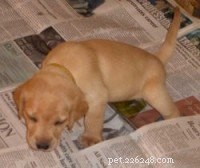
È una buona idea addestrare su carta il tuo cucciolo a fare il bagno all'interno quando si trova nella sua area di confinamento, anche se il tuo piano finale prevede che faccia il bagno solo all'esterno.
Questo perché, a seconda dell'età del cucciolo, è fisicamente impossibile per lui trattenere la vescica per più di un paio d'ore finché non cresce.
Personalmente, ho sempre scoperto che con ogni cane che ho posseduto ci sono sempre momenti in cui ho dovuto lasciarli soli per 3, 4, forse 5 ore. Ho intenzione che ciò non accada, ma occasionalmente accade.
Non puoi tenere in gabbia un cucciolo per tutto questo tempo, quindi devi avere un piano di riserva. E questo significa confinarli in un recinto per esercizi o in un'unica piccola stanza con un'area ricoperta di carta dove possano usare il vasino.
Quindi, anche se quando sono a casa sono vigile e addestro molto attivamente il mio cucciolo a fare il bagno all'aperto, devo anche addestrarlo su carta per le strane occasioni in cui non sono a casa.
Dopo aver parlato con molti amici e proprietari, so che questo è uno scenario comune a molti.
Molte persone permettono ai loro cani di usare l'intero cortile come toilette, purché sia all'aperto. Ma potresti prendere in considerazione l'idea di addestrarli a utilizzare solo un punto specifico ogni volta.
Se gli è permesso di andare ovunque nel cortile, è molto probabile che non sarai in grado di trovare e raccogliere tutti i loro escrementi, il che non è una buona cosa se hai bambini che giocano lì, o "depositi" di cuccioli attorno al tuo bel lettino.
Potresti anche scoprire che l'urina del tuo cane provoca "bruciature sul prato", ovvero l'erba diventa marrone nelle aree del prato utilizzate regolarmente.
Inoltre, se fanno la pipì regolarmente vicino a una porta o sotto una finestra, può diffondersi una puzza per tutta la casa, soprattutto in estate. Ma…
Se li insegni a utilizzare un solo punto, il tuo giardino sarà più pulito e igienico per tutti gli altri utenti, non avrai il problema dell'erba bruciata dall'azoto e sarà molto più facile per te mantenere pulito il tuo giardino.
Quindi ha perfettamente senso addestrare il tuo cane a utilizzare ogni volta un'area specifica.
Un'area lontana da porte, finestre, barbecue o aree gioco. Ma per favore non pensare che se scegli un posto "fuori mano" puoi sottrarti ai compiti di pulizia.
Ai cani piace andare dove sentono l'odore di dove sono stati prima, ma deve essere comunque pulito. Quindi, se vuoi che continuino a utilizzare quell'unico posto, devi comunque raccogliere ciò che puoi e pulire regolarmente l'area.
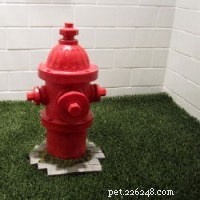
Quando scegli un posto per il vasino da interni, la prima cosa che devi tenere a mente è che devi convivere con l'odore.
A causa delle limitazioni di spazio non è sempre possibile, ma dovresti cercare di evitare luoghi come camere da letto, aree dove giocano i bambini o ovunque prepari o conservi il cibo. Questo non lascia molte opzioni!
I luoghi ideali sono qualsiasi stanza poco utilizzata:una stanza degli ospiti, la lavanderia o un bagno poco utilizzato.
Un'altra considerazione è la superficie su cui posizioni il bagno del tuo cane. Per l'utilizzo del vasino da interno con i cani ci sarà sempre il rischio di incidenti e di incidenti.
Quindi, se puoi, posiziona il bagno del tuo cucciolo su un pavimento piastrellato o in linoleum. Oppure, se deve trovarsi in una zona con moquette, stendi un telo di plastica sotto il WC per proteggere il pavimento e facilitarne la pulizia.
Ci sono molte opzioni tra cui scegliere da utilizzare come vasino da interni. Cestini per il tappeto erboso, vassoi per i rifiuti, alcuni nuovi hanno anche un sistema di drenaggio che raccoglie i rifiuti in serbatoi di stoccaggio... l'elenco è ormai quasi infinito.
Quindi quale dovresti scegliere?
Personalmente alleno sempre i miei cani a usare il vasino all'aperto e non fornisco loro una toilette interna permanente.
Pertanto non ho mai preso in considerazione cestini per l'erba o lettiere, scegliendo invece di utilizzare carta e assorbenti per i cuccioli se devo lasciarli a casa da soli più a lungo di quanto possano contenere la vescica.
Ma se devi fare una scelta:quali sono i pro e i contro di ciascuno?
[amazon field=”B01MPWFYZA” value=”thumb” image_size=”large” tracking_id=”labradortraininghq-20″ image_class=”ais200fr”] I cuscinetti per cuccioli sono altamente assorbenti e possono essere posizionati in un vassoio con bordi rialzati, riducendo le fuoriuscite e rendendo la pulizia relativamente facile.
Sono spesso immersi in un profumo per attirare un cucciolo da eliminare su di loro in modo che possano aiutare ad accelerare un po' il processo di addestramento in casa. Inoltre stanno meglio in casa rispetto ad un'area ricoperta di carta (leggermente).
Lo svantaggio è che non coprono un'area ampia quanto quella della carta e ho sentito storie di cani che imparano a divertirsi facendoli a pezzi, ma immagino che questo sia vero per la maggior parte delle cose!

La carta costa molto poco e se usi vecchi giornali è quasi gratis! Potrai così coprire una vasta area a costi molto bassi mentre il tuo cucciolo è giovane e inesperto.
Tuttavia, l'urina spesso scorre via dalla carta prima di essere assorbita, quindi le fuoriuscite sono più comuni e la pulizia più difficile. Inoltre, i bambini possono immergere più facilmente la carta nel pavimento sottostante, anche se puoi usare un vassoio come quello dei cuscinetti per cuccioli, se lo desideri.
Infine, è molto facile per il tuo cucciolo strappare la carta e spargerla nei punti in cui l'assorbente è più contenuto quando viene infilato in un vassoio.
[amazon field=”B00G7RMCHO” value=”thumb” image_size=”large” tracking_id=”labradortraininghq-20″ image_class=”ais200fr”] Una lettiera è facile da pulire grazie alla lettiera altamente assorbente che assorbe i rifiuti e ai lati alti della lettiera che fanno un buon lavoro mantenendo tutto contenuto. Sembra anche migliore di una serie di giornali.
Ma il problema principale con i rifiuti è che alcuni cani li vedono come uno spuntino, possono essere portati via dal vassoio e calpestati per casa quando sono attaccati alle loro zampe e Dio non voglia che tu abbia un cane che cerca di seppellire i loro rifiuti!
[amazon field=”B002DCWA4C” value=”thumb” image=”2″ image_size=”large” tracking_id=”labradortraininghq-20″ image_class=”ais200fl”] I box per tappeto erboso sono disponibili con opzioni di tappeto erboso autentico o sintetico.
Funzionano bene perché sembrano così diversi dal pavimento circostante che un cucciolo può facilmente distinguerlo come un'area vasino, il tuo cane sente una sensazione morbida ed erbosa sotto i piedi e fanno un buon lavoro nel tenere tutto contenuto.
Lo svantaggio è che sono le opzioni più costose tra quelle disponibili e alcuni cani sviluppano l'abitudine di provare a scavare e masticare il box per l'erba come farebbero con un pezzo d'erba esterno.
Consiglio di utilizzare i giornali con un cucciolo molto giovane, confinato in una stanza singola con un pavimento facile da pulire.
Una volta che il tuo cucciolo si sarà abituato ad andare sulla carta, taglia l'area coperta fino alla dimensione di un paio di fogli, quindi posiziona i cuscinetti in un vassoio sopra la carta e incoraggia il tuo cucciolo a usarlo.
La carta è così economica che puoi usarla in abbondanza con un nuovo cucciolo finché non sarà almeno semi-addestrato, per poi passare ai assorbenti per cuccioli in modo che il compito di pulizia sia più semplice.
Se hai bisogno di usare solo un vasino al coperto con il tuo cucciolo molto giovane finché non matura, imparare un po' di controllo della vescica e poi usare esclusivamente l'esterno, non prenderei mai in considerazione una scatola o un vassoio per l'erba.
Ma se intendi utilizzare un bagno interno a lungo termine, potresti prendere in considerazione cestini per l'erba, vaschette per i rifiuti o anche uno dei servizi igienici interni più moderni e creativi disponibili.
Sono disponibili alcuni moderni gabinetti per cani che richiedono solo una pulizia settimanale, alcuni che eliminano gli odori e molti che hanno un aspetto migliore della carta o dei assorbenti per cuccioli come caratteristica permanente di una casa, quindi potresti voler ricercare alcune di queste opzioni.
Esistono 4 metodi ampiamente utilizzati e consigliati tra cui puoi scegliere, anche se la realtà è che quasi sicuramente utilizzerai una miscela di 2 o più.
Questi metodi sono:
Nel resto di questa guida farò riferimento a ciascuno di questi 4 metodi e a quando dovresti o potresti utilizzarli.
Per essere sicuro che tu abbia una buona conoscenza di cosa sia ciascun metodo e di cosa comporta, fornirò un breve riepilogo di ciascuno.
Metterò anche dei collegamenti ad articoli più dettagliati che ho scritto su ciascun metodo per coloro che desiderano una comprensione più dettagliata.
 © Depositphotos.com / agencyby
 La formazione cartacea è il metodo più conosciuto e più comunemente utilizzato per la formazione domestica in tutto il mondo.
Ecco un breve riassunto della tecnica:
Descrizione: L'addestramento cartaceo consiste nell'insegnare al tuo cucciolo a usare il bagno in casa su un'ampia area di giornali o assorbenti pretrattati che incoraggiano il cucciolo a utilizzare l'area come bagno.
Una volta abituati a usare la carta o i blocchi, taglia lentamente l'area coperta fino a quando non utilizzano in modo affidabile solo un paio di fogli e non mancano mai.
Poi sposti lentamente la carta verso l'esterno dove è posizionato un altro set e inizi a incoraggiare il tuo cucciolo ad uscire solo, prima di rimuovere completamente la carta all'interno. A questo punto avranno effettuato la transizione.
Un ottimo consiglio durante l'addestramento sulla carta è che quando pulisci la carta sporca, dovresti trattenere un pezzo e posizionarlo come strato intermedio della nuova carta.
Gli assorbenti per cuccioli hanno un profumo che attira il cucciolo, la carta no.
Ma trattenendo un pezzo di carta leggermente sporco con l'odore dell'urina del tuo cucciolo, otterrai lo stesso effetto di attirare il tuo cucciolo a fare i bisogni dove vuoi.
Efficacia: Su una scala da 1 a 5, gli do un 3.
Non può ottenere un punteggio più alto perché li stai addestrando a usare il bagno all'interno prima di riaddestrarli a non farlo! Ciò crea confusione e renderà il processo di apprendimento più lungo.
Porta anche a commettere errori (fare il vasino all'interno) molto più tardi nella vita del cucciolo rispetto agli altri metodi, in particolare quando vedono della carta lasciata in giro.
Più adatto a: Sia le persone che avranno un bagno in casa a lungo termine, sia le persone che non utilizzeranno un trasportino per l'addestramento ma non possono impegnarsi a supervisionare costantemente il proprio cucciolo quando è in casa.
Ma è anche un buon piano di riserva che tutti possono utilizzare per i momenti in cui devono lasciare il cucciolo a casa da solo più a lungo di quanto ci si potrebbe aspettare per tenere la vescica.
Facilità d'uso: Su una scala da 1 a 5, sicuramente un 5.
È un metodo molto semplice da utilizzare e richiede il minimo sforzo da parte tua rispetto a qualsiasi altra tecnica.
Ma ciò comporta più errori da parte del tuo cucciolo fino a tarda età. Quindi all'inizio puoi essere più passivo e meno coinvolto, ma avrai più pulizie da fare più avanti nella vita del tuo cucciolo rispetto ad altri metodi.
Attrezzatura necessaria: Nient'altro che pile di vecchi giornali! Un metodo molto conveniente.
Ulteriori informazioni: Per una discussione dettagliata sull'addestramento cartaceo, i pro, i contro e alcuni consigli degli esperti, consultare il seguente articolo:Come addestrare il tuo cucciolo o cane con la carta in modo semplice
[amazon field=”B001DRY8Z2″ value=”thumb” image_size=”large” tracking_id=”labradortraininghq-20″ image_class=”ais200fl”] Usare un trasportino è il modo più efficace e semplice per accelerare il processo di addestramento in casa.
Descrizione: Il metodo sfrutta il fatto che i cani hanno un istinto naturale a non sporcare la zona dove mangiano e dormono.
La chiave per raggiungere questo obiettivo è rendere la cassa abbastanza grande da poterci stare dentro, girarsi facilmente e sdraiarsi distesa, ma non più grande.
Un cucciolo o un cane lo "tratterranno" il più a lungo possibile per evitare di fare i bisogni e poi dovranno sdraiarsi.
Un enorme vantaggio di questo è che un cucciolo impara da molto giovane che solo perché ha il bisogno di fare pipì o fare la cacca, non è obbligato a farlo e può effettivamente trattenerlo. Con altri metodi un cucciolo non impara questo fatto quando è così giovane.
Tuttavia, non metti sempre il tuo cucciolo nella gabbia, sarebbe crudele.
Li metti in gabbia solo quando non puoi guardarli, sei impegnato in casa o magari lontano da casa per un breve periodo. Il resto del tempo li guardi e li porti regolarmente fuori a usare il vasino per insegnare loro le buone abitudini.
Efficacia: Su una scala da 1 a 5, gli do 5
Dico che è il metodo più efficace che conosca o di cui abbia mai letto. I cuccioli imparano il comportamento corretto più velocemente che con qualsiasi altra tecnica e ci sono meno errori (e meno pulizie!) lungo il percorso.
Più adatto a: Tutti! Consiglio vivamente di utilizzare una cassa durante il processo di formazione domestica perché è molto efficace.
Facilità d'uso: Su una scala da 1 a 5, direi 3.
È più facile della supervisione costante, più difficile della formazione cartacea. Questo perché dovrai addestrare il tuo cucciolo nella gabbia prima di poter utilizzare una gabbia per l'addestramento in casa, il che richiede tempo e impegno.
Fai clic qui per la mia guida gratuita e dettagliata su come addestrare il tuo cucciolo nel trasportino.
Attrezzatura necessaria: Una cassa adatta. Ho una guida per aiutarti a selezionare la taglia e la tipologia giusta che puoi leggere cliccando qui.
Ulteriori informazioni: Per leggere una discussione dettagliata sull'uso di un trasportino per l'addestramento in casa, leggi:Come utilizzare un trasportino per addestrare un cucciolo in casa
Questo articolo spiega perché il metodo è così efficace, come sfrutta 3 istinti naturali del tuo cucciolo, valuta alcuni pro e contro e molto altro ancora.
 © Depositphotos.com / agencyby
 Descrizione: È proprio come sembra:trascorri tutto il tuo tempo con il tuo cucciolo, supervisionandolo costantemente.
Ogni volta che vedi i segnali che stanno per usare il vasino, raccoglili e portali al loro posto in bagno.
Efficacia: Su una scala da 1 a 5, gli do provvisoriamente un 3.
Potrebbe effettivamente ottenere un punteggio più alto o più basso a seconda di quanto sei impegnato e di quanto sei riuscito a supervisionare il tuo cucciolo.
Ma gli ho dato un 3 perché non importa quanto siano buone le tue intenzioni, non importa quanto sei attento al compito di supervisione, abbasserai la guardia e il tuo cucciolo sarà in grado di scappare e commettere errori.
Per questo motivo, non è efficace quanto l'addestramento alle casse e richiederà più tempo, provocando sicuramente più "incidenti" lungo il percorso.
Più adatto a: Persone che sono contrarie a qualsiasi tipo di reclusione e possono restare a casa a guardare il proprio cucciolo tutto il giorno, tutti i giorni. Principalmente persone che lavorano da casa e pensionati.
Ma questo metodo fa parte anche di ogni piano di formazione domestica, indipendentemente dal fatto che si utilizzino altri metodi insieme o meno. Questo perché quando un cucciolo è libero in casa, DEVE essere attentamente supervisionati per evitare eventuali errori.
Ease of use: On a scale of 1 to 5, I give it a 2.
It scores low as it requires a lot of input from you as the owner. You need to concentrate on your puppy at all times, ready to intervene and correct them any time they’re about to potty where they shouldn’t.
It is quite draining never being able to take your eye of your puppy.
Equipment needed: None. Niente. Not a crate, newspapers, puppy pads or anything. The cheapest of all the methods…unless you put a price on your time.
Further Info: For more information on the constant supervision technique, please read the following article:House Training WITHOUT A Crate:Constant Supervision
 © Depositphotos.com / andresr
 This is a little used technique, and at first may sound a little silly. But it is highly effective.
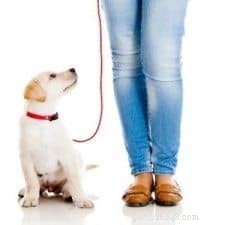
Descrizione: This technique calls for you to tether your puppy to you by leash and have them follow you wherever you go when inside your home.
This way they’re never more than a few feet away and have no chance to sneak off unnoticed to potty where they shouldn’t.
You will notice and be able to intervene and correct every possible mistake, taking them outside every time they need to relieve themselves.
Effectiveness: On a scale of 1 to 5, I’d say it’s a 5.
Used correctly, the opportunity for your puppy to make mistakes is completely removed so every single time they need to visit their bathroom spot is a training opportunity you will take advantage of and no mistake goes uncorrected.
Best suited to: People who spend all their time at home with their puppy and would also enjoy literally being tied to their pup all day.
It’s also a good method to throw into the mix for people who’ve found difficulty with ‘constant supervision’ and allow their puppy to sneak off and have accidents in the home, helping them to get better results.
Ease of use: On a scale of 1 to 5, I’d say a 4.
It’s easier than constant supervision as your puppy is attached so you can relax a little in comparison.
It’s easier than using a crate because you don’t have to crate train your puppy. But it’s not as easy as paper training which is very hands off for an owner.
Equipment needed: A quick release collar and a house line / leash.
Further Info: for a detailed discussion of this technique, the benefits, downside, and many more tips, please see my article:Umbilical Cord House Training:What is It? How Does It Work?
I use and recommend a mixture of crate training, constant supervision and paper training.
I primarily use crate training as I firmly believe it’s the most effective method and I’m also a strong believer in the idea that every dog deserves to be crate trained to enjoy the continuous benefits it offers throughout their life.
I use constant supervision extensively because when a puppy is outside of the crate you have to watch them diligently to avoid puppy mistakes.
I use paper training while my puppies have almost zero bladder control until the age of 10 or 11 weeks, and later in life when I can’t avoid leaving them home alone for longer than they can be expected to hold their bladder.
Admittedly this is somewhat going against my advice because I always recommend to avoid paper training if possible.
It encourages or allows your puppy to toilet inside the home, before then training them not to do so. It’s saying it’s OK, before turning full circle and saying that it’s not.
This is confusing to your puppy and harmful to our house training efforts. (Unless you’re going to have a permanent indoor bathroom spot of course, then this method is perfect.)
But even though I recommend against it, using paper training ever so occasionally as a fall back plan works well for me.
I explain more fully why and when I use paper training in later sections of this article on ‘House Training For Full Time Workers ‘, and ‘A Note On Puppies Between 8 And 12 Weeks ‘
 © Depositphotos.com / andresr
 Though not essential, it’s extremely useful to train your dog to eliminate on command.
When you’re in a hurry and need to leave in the morning, or it’s right before bed time, these are times you will wish your dog would eliminate on command rather than you having to patiently wait for them to do their job.
Most dogs love being outside and will use any excuse to get out there and stay there.
So it’s of benefit if you can clearly tell them you’re going outside to toilet only and for nothing else, that there’s no chance of exercise or play. If they don’t potty, they’re coming straight back in.
You do this by using a cue word and walking them on leash to their potty spot, not allowing them to do anything else and if they do not potty, taking them back inside and trying again in a few minutes.
Because a full bladder or bowel is uncomfortable, dogs are happy to relieve themselves, but some may try to hold it if they think they can get to stay outside and sniff around a while.
By not allowing this and associating it with a consistent command, it will only take a few short weeks for them to learn your chosen command means a bathroom break only and that if they don’t go, they’re coming straight back inside uncomfortably full.
If this is something you’d like to train, it’s important that you choose the words to use before you start the training and make sure everybody uses the same words consistently.
If people use different words, your dog will get confused.
So pick a command like ‘toilet time ‘ that you will only use when you’re taking them to the bathroom and you will not allow them to do anything else.
You’ll have a different word like ‘walkies ‘ for other more fun times outside and your dog will eventually learn the difference and set their expectations of their time outside accordingly.
Once outside you can use another command like ‘potty’ or ‘do your job’ to ask them to do their business.
For the first weeks you should wait for them to start doing their business and then use the word ‘potty’ to build an association. And praise them afterwards with ‘good potty’. This will slowly teach them the command.
Eventually your dog will learn ‘toilet time’ means a quick bathroom break only, and ‘potty’ is you asking them to go.
NOTE: For a very good guide on training to eliminate on command from the ‘Whole Dog Journal’, please click here.
A quick word of caution: Don’t use a word for your elimination command that gets used at other times. For instance, many people use the words ‘hurry up!’, but if you say this to your spouse when heading late out the door, this could get very messy if your dog hears and reacts.

When your puppy’s very young it’s easy enough for you to scoop them up and carry them to their bathroom spot. And this is fine for the first couple of weeks while they have no bladder control and will perform their business very quickly.
But once they start to learn some bladder control, if you take them to potty without them being on leash, as soon as they hit the outside there’s all the sights, sounds and smells that can take over their inquisitive minds.
They easily forget what they’ve gone outside for and will romp and play in your yard instead, before going back inside still full. And some dogs even learn to actively hold their bladder just so they can stay outside to explore for longer.
So it’s in your best interests to lead them on leash to their bathroom spot and keep them there until they complete the job in hand.
Before you can do this you need to first get your puppy used to wearing a collar and leash. To help with this I’ve written a detailed guide that you can read by clicking here:How To Get Your Puppy Used To A Collar And Leash
Start this process at 10 weeks, and always lead them on leash from the 11th or 12th week. You may regret it with lots of time waiting outside if you don’t!
Like everything in life, house training runs smoother if you have everything ready before you start, hopefully before you even bring your puppy home. Although it’s never too late of course!
To help make sure you’re ready, here’s a checklist to cross off and make sure you have everything prepared. Have you:
With all this ready and in place, you’re now ready to begin house training your puppy.
Dogs thrive when living to schedules and routine, doing best when they have set times for eating, going to toilet, exercise, training and play.
And when it comes to house training, you’re going to love schedules and routine too!
If you feed your puppy at random times throughout the day, they’ll need to defecate at random times throughout the day.
They won’t fall into any predictable schedule and your life will be that much harder.
But because the passage of food through their digestive system stays roughly the same, if you feed your puppy at the same times every day they will need to defecate at roughly the same times every day.
Furthermore, because puppy’s learn through repetition, by taking yours out to potty at the same times every day, their body learns to expect and follow this schedule, training your puppy to toilet at the times you’d like them to.
When you know the times your puppy needs to eliminate you can have them at the right spot at the right time with a far greater success rate than if you didn’t follow a routine.
This results in fewer mistakes, more opportunities to praise your puppy for going in the right place and so speeds up their learning.
Depending on their age a puppy will need to poop 3 to 6 times a day, and wee many more times than that. Can these times be predicted? Mostly they can.
When a puppy needs to potty depends on when they last ate, drank and their recent activities. Mostly they need to go:
But a puppy also needs to go many times per day regardless of recent activities, so you should also take your puppy to their bathroom spot on a consistent schedule such as the following:
This is only a guideline because all puppy’s are different. And on that note…
Not all puppies are the same. Some will need to wee within 2 minutes of drinking, others after 20 minutes. Some will need a bathroom break within 2 minutes of waking, others 15 minutes later.
This means there isn’t a ‘one-size-fits-all’ schedule I can give that’s suitable for every puppy and owner. You have to determine your puppies own natural tendencies and create a schedule to suit.
This may sound like a lot of work but it really isn’t once you get in to the routine. And besides:
Once you’ve determined your puppy’s natural rhythms, you can be at the bathroom spot at the correct times more accurately which is of huge benefit to both you and your puppy, so it’s highly worth doing!
But if you fear living to strict schedules is too hard to do…don’t fear! You don’t have to stick to them 100% of the time.
The more you can stick to schedules and routines, the smoother and faster the process will be. But you can stray from the path when necessary and still find success, it will just take a little longer.
Just don’t be overly strict and hard on yourself because we all have a life to live outside of house training!
So let’s go through the 5 steps of creating your puppy’s schedule.
 © Depositphotos.com / zzve
 Follow this 5-step process to create a schedule that works with your puppy’s natural rhythms and fits with your lifestyle and commitments.
Keeping and following a written schedule may seem odd or a bit excessive, I’m sure you’ve not seen many people bother with it?
But I promise you it’s not much work, after a couple of days practice it becomes a simple routine, the time it takes is negligible and the results are phenomenal.
Depending on how old they are, your puppy needs feeding between 2 and 4 times a day. Here’s a guide to how often and when you should feed them:
You should feed your puppy 4 times a day until 12 weeks old.
To achieve this you need to feed them every 4 hours and you should make it the same time every day, fitting it into a schedule that’s best for you.
A good routine would be to feed ‘breakfast’ when you first get up, at 7:30AM, then at 11:30AM, 3:30PM and 7:30PM.
You should feed your puppy 3 times a day when 12 to 26 weeks old.
The timings for 3 feeds a day would be roughly every 6 hours:7:30AM, 1:30PM and 7:30PM.
From 26 weeks old and onwards, feed your puppy just two times a day
For 2 meals a day you need to space them out 8 to 12 hours apart.
What works for me is shortly after I get up at 7:30 and when we have our evening meal between 6:15PM and 6:45PM.
Availability Of Water:
You should make sure fresh water is always available but because drinking too much or too little can be a sign of health problems, you do need to monitor their water intake.
© Depositphotos.com / Madrabothair Physical activity has a direct influence on a puppy’s potty schedule because it ‘helps things move along’ for want of a better expression.
Physical activity often leads to a puppy needing to potty very soon after. So to encourage predictable potty times for your puppy, you want to schedule their exercise and play.
This will help your puppy’s mind and body to slip into a routine that will help you both with the house training process.
Deciding when to exercise, train and play with your puppy is entirely up to you. You should fit it around your lifestyle and commitments, but try to make it the same times each day if you can.
If you’ve followed the guide so far, you’ve now gathered all the information you need to design your puppy’s house training schedule.
Enter all the following details into a single column in an excel spreadsheet, or write them down as a day schedule with a pen and paper:
After writing down this schedule, tick off each task as you go through the day with your puppy.
This way you will always know what needs to be done and when, and there will be no confusion about whether someone else in the house fed, exercised or took the puppy to the loo.
If it’s not crossed off the schedule, it hasn’t been done.
 © Depositphotos.com / Gajus-Images
 Alongside the schedule you’ve designed, add some columns where you can take notes of your puppy’s bladder and bowel movements, as well as their daily activities.
You do this because it’s important information you can use to design an ever more accurate schedule going forward. (I discuss this further in step 5 below.)
The things you should write in your diary are:
Basically, note down anything food, activity, accident or potty related so you can look for patterns to help you in the next step.
Look over any ‘accidents’ your puppy had and you noted during the day.
You should be able to pick up on any patterns and adjust your own behavior to avoid mistakes in future.
Was puppy left alone and peed in the living room while you made breakfast? – You need to increase supervision or make doubly sure you crate them when you’re busy.
Puppy should never be left alone unsupervised, learn from this mistake.
Or maybe puppy peed in the crate after an hour? – You left them crated longer than they can hold their bladder, or didn’t empty them before crating.
Learn from this mistake.
Look over how long they took to potty after being taken for a scheduled potty break
Did you catch them ‘in the act’ 3 times in a single day? Well done for watching them closely enough.
However, if they tried to go 3 times in the home, you’ve learnt that you likely aren’t taking them to empty themselves often enough. So increase the frequency.
Or perhaps the opposite happened and you noted that 3 times in the day you took puppy for a scheduled bathroom break, they didn’t go and you returned them inside for 15 minutes before trying again?
This shows your puppy is maturing fast, doesn’t have to potty as often as you thought and can last longer between potty visits than you’re allowing.
Therefore you should stretch out the time between visits by 10 to 15 minutes for the following day.
Look over how long after eating they pooped
If you see puppy didn’t potty for 20, 15, 20 and 20 minutes after their meals of the day, with this information you learn it’s pointless to take them to their potty spot until 15 minutes after they finish eating.
Some puppy’s go 2 minutes after eating, some after half an hour. This is how you find out.
By writing out the schedule as in step 3, you should never forget to feed, train or take your puppy to potty. If it’s not marked off on the schedule, it’s not been done.
And by using the schedule as a diary as in step 5, you get feedback on how you and your puppy are performing, and are armed with the necessary info to make changes to your schedule over time.
This helps you to truly match your puppy’s natural rhythms and their maturing and changing body.
You, your puppy and their needs all stay in sync and house training becomes that much easier.
 © Depositphotos.com / ccaetano
 For ease of use, I recommend simply keeping a written diary with good old-fashioned pen and paper.
We’re all in the electronic age surrounded by smart phones and i-Pads, but this is simply too much hassle and will likely lead to you not bothering if you have to power up a device and so on to make an entry.
Just make a spreadsheet in excel and print it out, or simply buy some lined paper.
Keep it somewhere you can always see and know where it is, alongside a pen or pencil and write entries in it as you watch your puppy throughout the day.
Next to your house phone, pinned to the fridge or by the exit to your puppy’s bathroom spot is a good place to keep it, but put it wherever is best for you.
When you first get your puppy home at 8 weeks, they can barely control their bodily functions so keeping a diary isn’t perhaps that helpful but I still recommend you do so, to get yourself into the habit.
I would recommend keeping a diary every single day until you’ve determined a definite pattern and have spotted their individual ways. Up until they’re 14 weeks old is a good target.
After this, continuing with a diary every day is the best advice, although keeping one for 3 consecutive days each week will be sufficient for you to pick up on any changes as they mature.
Once your puppy is 5 to 6 months old, they will have sufficient bladder control and experience to make a schedule and diary unnecessary.
Just make sure they get access to the outside at least once every 3 hours and all will be fine.
I discussed earlier how a puppy will need regular visits to their bathroom spot, something like every 30 minutes at 8 weeks old, every 45 minutes at 10 weeks old and so on.
But every puppy is different and their progress in having longer time between needed toilet breaks will vary too.
Although your puppy’s natural progression reflects in your diary and your schedule will adjust to suit, you should purposely try to increase the time between breaks yourself if it doesn’t happen naturally.
If you don’t see a natural increase of time between eliminations, add 5 minutes to the scheduled times every 3 or 4 days to stretch out how long they can last.
If they can’t make the time, peg it back 5 minutes and try to increase the time again in a further 3 or 4 days.
You do this because as a puppy grows, the size of their bowel and bladder increases, so they will be able to hold more for longer and you want to take advantage of this.
This is also teaching them necessary bladder and bowel control.
Your aim is to have them needing a toilet break only every 4 hours or so by the time they’re 5 to 6 months old.
In an ideal world, when you take your puppy to potty they will empty themselves completely and instantly, with no delay and not holding any back to release as soon as they’re back in your home.
There are a few things you can do and some that you certainly shouldn’t that will help you to achieve this goal.
Use your cue word before you take them: By using your chosen cue word every time before you take them to potty, your puppy will learn what the trip is about and what they must do. This eventually leads to faster results as they know what is expected of them.
Lead your puppy to the bathroom spot on leash: This gives you the ability to keep your puppy at the bathroom spot and prevent them wandering off, getting distracted and forgetting what they are there for.
This isn’t always possible if you catch them in the act and must hurry, but for scheduled bathroom visits you should always aim to take them on leash.
Make sure you stay with them at their bathroom spot: If you have them on leash, then of course you will be. But if you don’t have them on leash, make sure you stay with them because the separation will just make your puppy anxious to get back with you and they will not potty.
Once at the bathroom spot, don’t say or do anything until they start to eliminate: Puppy’s get distracted very easily and any attention can take their mind off the job in hand. Be boring, uninteresting, and just hold your puppy’s leash until they start to go.
When they start to go, say your chosen cue word in a soft warm voice. Otherwise remain silently still until they’re finished: You need to associate your cue word with the act, but if you say it too loud and brightly, it may distract them and they won’t finish.
Similarly, any other movement or sounds like praising them too early or shuffling your feet might distract them and they might not finish what they’ve started.
If they don’t finish and completely empty themselves, they may finish inside your home and even if they don’t they will not be able to make it to the next scheduled bathroom break so an accident in the home is more likely.
When you’re sure they’ve finished, praise them like mad and reward them: You should heartily praise your puppy for going in the right place, then allow them a few minutes off leash, a couple of minutes play or a tiny (and I mean tiny!) but tasty food treat.
The praise and reward make going to potty a happy experience, tells them they’ve done right and helps them to learn more quickly.
Mix up the reward between play, time off leash and a food reward to keep them guessing, but keep the food rewards to a minimum as what goes in must come out and random feeding promotes random elimination times!
 © Depositphotos.com / c-foto
 First of all, make sure you’ve spent enough time out there.
Many people pop out, stand for 1 minute and then come back in. This isn’t enough as a puppy can only go when they need to go and they may not be ready.
Some people recommend to stay out there for 10, 15, 20 minutes, whatever it takes until they go, then praise profusely when they do. Although this advice may be sound, personally I’d rather not.
I recommend you give them 3 to 5 minutes, saying your cue word every 30 seconds or so but otherwise standing silently still just holding their leash so they cannot wander off.
If after 3 to 5 minutes they haven’t been to toilet, bring them back inside your home and then:
If using constant supervision: Set them down in your home and continue watching them to intervene in case they make moves to go in the wrong place. Take them back to their bathroom spot in 10 minutes or so.
If using a crate for house training: Pop them back in the crate and leave them for 10 minutes. Then take them back to their bathroom spot.
If using umbilical cord training: Take them back into your home and watch your puppy carefully while they’re tethered to you by leash. Take them to their bathroom spot after 10 minutes.
If paper training: If they are confined to the area that’s papered, do nothing. If not, take them away from their bathroom spot and watch them for 10 minutes before returning them to their bathroom spot.
In all cases, just remember you’ve brought them back in with a full bladder so you mustn’t take your eye off them if free in your home.
And if crate training, do not leave them in the crate too long else they may be forced to soil in there. Prevent this at all costs.
Rinse and repeat the visits to and fro like this until they do potty, then follow the next sections advice.
Between scheduled bathroom visits you should do two things:Allow some supervised free time in your home, and use your chosen house training method.
 © Depositphotos.com / ikostudio
 After returning from the bathroom spot you should grant your puppy some free time in the room where you spend most of your time, up until 20 to 25 minutes before their next scheduled bathroom visit.
By free time I mean time outside of their crate, or off leash, or out of their confinement area. Time free to roam, explore and live life.
When 10 weeks old they may need to toilet every 30 minutes, so they only get 5 to 10 minutes free time. When 12 weeks old, they may need to toilet every hour so they can get 35 to 40 minutes free time.
You allow this free time because you are of course working toward a time when they will always be free and trusted unsupervised.
To get there they need the experience, to get used to being free in your home and begin seeing it as a place they need to keep clean.
They also need social interaction and life experiences.
The best time to grant this free time is right after a bathroom visit so you’re fairly sure they’re empty and are far less likely to make a toilet mistake in your home.
The important thing to remember is:
When your puppy is free in your home in this way, you must know exactly where they are at all times and be watching them like a hawk, ready to intervene if they look like they’re about to potty where they shouldn’t.
But what are the signs a puppy is about to potty?
When supervising your puppy’s free time, the signs you need to look out for that they need to eliminate are:
The minute you see any of these signs you should take your puppy to their bathroom spot immediately. There may well be some false alarms, but better safe than sorry.
Most puppies will display one or more of these pre-elimination behaviors, but no two puppies are the same so you need to be observant and learn your own puppy’s pre-toilet rituals.
Carefully watch them and you should soon notice what body language means a wee or a poop is imminent. There will be recognizable signs.
 © Depositphotos.com / AOosthuizen
 Once your puppy has enjoyed some free time and it’s nearing 20 to 25 minutes before a scheduled potty visit, you need to switch to using your chosen house training method.
We do this because the time is fast approaching when mistakes are most likely to be made. So we might crate our puppy, or attach a leash for umbilical cord training if we’re using these techniques.
Remember, all free time is closely supervised anyway so you’re ready to react if they’re about to ‘make a mistake’, So..
If using constant supervision: Carry on as you are. Watch your puppy and be ready to react if they look like they’re about to potty. Then at their scheduled potty time, attach a leash and lead them to their bathroom spot.
If using a crate for house training: Encourage your puppy into their crate and close the door, leaving them there until their scheduled potty time and then release them, instantly attaching a leash and leading them to their bathroom spot.
If using umbilical cord training: Attach a leash and tether your puppy to you, ready to react if they make moves to eliminate. Take them to their bathroom spot at the scheduled time.
If paper training: Take your puppy to their confinement area where their papered bathroom spot is and supervise them, ready to intervene if they make moves to potty away from the paper. Encourage them to potty at their scheduled time if they don’t do so naturally.
If you catch your puppy pottying in the wrong spot, you should simply clap your hands and say a firm ‘NO!’. You don’t want to shock and scare them, just loud enough to startle and get their attention.
It’s very important you DO NOT scare them as they may become afraid to potty in front of you. Not good when you need to be there to encourage them for doing it in the right place.
When you clap and say ‘NO!’, some puppies will stop what they’re doing, but others may not.
If they do, you can pick them up and carry them, or take them by the collar and gently lead them to their bathroom spot, then encourage them to finish where they should.
But if your puppy doesn’t stop mid-flow, my advice is to accept the fact you’re too late, you didn’t recognize the signs they needed to potty (or weren’t watching them closely enough) and you should let them finish and then clean it up.
Many people recommend to pick your puppy up and take them outside even if they don’t stop. But to me this seems foolish.
Instead of a little pile or puddle, you then have a long line of wee or poop from where you caught them all the way to the bathroom spot that you then have to deep clean instead. To me this isn’t worth the extra cleaning effort.
 © Depositphotos.com / adogslifephoto
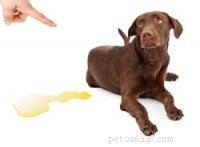
 There is nothing you can do.
You’ve missed the opportunity to correct your puppy and anything you do now your puppy will be unable to connect to the act of pottying in the wrong place.
If you get angry, shout at or punish them in any way, they might ‘look guilty’ trying to appease you, but they will have no idea what it is that’s driven you mad. They’re just trying to calm the situation.
And what sometimes happens is a puppy learns that poo on the floor is what you’re mad about, causing them to slink away to poo where it’s hidden, or worse they may even eat it so you don’t see it and get mad.
So if you stumble on a mess you didn’t catch them make, simply move them away and deep clean the area.
Then think how they were able to make such a mistake and tweak your plans so it cannot happen again. But any corrections or punishment now will be futile.
This advice applies not just to full-time workers, but also if you must occasionally leave your puppy home alone for a few hours.
Most importantly, follow all the advice in this guide so far for the times that you are home.
Supervise them, correct any mistakes, set feeding and elimination schedules and everything else I have advised. Then, what follows are your choices of what you can do to cover when you aren’t at home.
First of all, if like me you use a crate, you simply cannot leave your puppy in the crate for many hours. They’ll be forced to potty in there after a very uncomfortable time trying to hold it for as long as they possibly can.
This is very unfair on your puppy and it will destroy the crates power as a house training tool if they lose the instinct to keep it clean.
Secondly, please do your best to enlist the help of a family member, friend, neighbor or hire a dog walker to periodically pop in to visit your puppy, take them to their bathroom spot, give them some social interaction and so on.
I understand this isn’t possible for all owners, but you should strive to achieve this if possible.
Having said that, what should you do about house training when you aren’t at home:
Throughout the many articles of this guide you will have read me advising against paper training unless you’re planning on a permanent indoor bathroom spot for your dog.
But I also freely admit to using paper training myself occasionally, for the unavoidable times I have to leave my puppy home alone for a few hours.
If you have to leave your puppy home alone for any reason, usually because you work, then paper training in your absence is the only thing you can do.
You then have two options available to you:Buy and use an exercise pen, or confine your puppy to a single, puppy-proofed room.
[amazon fields=”B003XU0B62″ value=”thumb” image_size=”large” tracking_id=”labradortraininghq-20″ image_class=”ais200fr”] An exercise pen is a confinement device that looks like a crate but is much larger and has no roof. They can have any number of panels, be square, hexagonal, octagonal, L-shaped…they’re very flexible (an example 8 sided pen is in the image to the right.)
You use it to confine your puppy so you know they’re safe, as is your home and belongings from their teeth.
They’re big enough for you to paper an area inside to use as a toilet, while leaving space where you can set up your dogs bed, a water bowl and some chew toys and so on away from where they have to potty.
Initially use less than half of the confinement area for your puppy’s bedding, toys and water bowl, then paper over the remaining floor space.
As they get used to pottying on paper, reduce the area covered one sheet at a time until just a small area remains covered.
Once you know your puppy can hold their bladder for longer than they have to be left alone, remove the paper altogether.
By 16 to 20 weeks, they should be able to last the 3 or 4 hours max they will be left alone and somebody comes to exercise them and allow a bathroom break.
NOTE: You should get your puppy used to an exercise pen by using the same techniques as crate training, so please refer to my guide to crate training puppies
[amazon fields=”B004RL1KPC” value=”thumb” image_size=”large” tracking_id=”labradortraininghq-20″ image_class=”ais200fl”] When I’ve had to leave a puppy alone, I confine them to a paper covered area of a puppy proofed room, with a puppy pad in a holder.
Between 8 and 12 weeks (when weeing seems spontaneous), my puppy spends a fair bit of time in there and I paper train them to use puppy pads.
Most recently, the room I used was basically our dining room, though it’s never used for that purpose and is essentially bare.
Our kitchen and dining room was separated by an arch where a door used to be, with tiled flooring, making it ideal.
I used a baby gate across the arch between the kitchen and dining room, and initially covered the dining area with paper, over time reducing it to just two sheets with the puppy pad holder on top.
The dining area is completely empty, with no furniture, nothing in there. So it’s as puppy proofed as can be. But a word of warning…
If you use this option and have any furniture or anything at all in the room, it’s likely it will be scratched and chewed! Skirting boards, the corners of furniture items, anything within reach is a potential target for teeth and claws.
My girlfriend works from home, we crate trained and we had no problem finding house sitters in an evening if we needed one, so we all but had things covered. But this is something you need to be mindful of.
So I recommend using an exercise pen if you’re going to leave your puppy alone often and there’s any chance of a room being damaged.
 © Depositphotos.com / feedough
 Regardless of the method of house training you choose, some form of confinement is almost always necessary, for the times when you really cannot watch your puppy.
And there will always be a time or two so it’s best to prepare in advance.
You may have an unexpected visitor or need to visit A&E in an emergency. Whatever the reason, there just WILL be times you cannot supervise your puppy.
If you’re using a crate, you have these times covered.
But if you’re against a crate for whatever reason and have chosen to exclusively use constant supervision or umbilical cord training, you will have to invest in an exercise pen or confine your puppy to a single room and use paper training.
The essence of house training is to prevent mistakes and praise your puppy heavily when they potty in the right place.
If you cannot watch your puppy, the chances of them making a mistake go through the roof.
So even if you choose to use a constant supervision method exclusively, you will still need to confine your puppy sometimes to a paper covered area just in case.
 © Depositphotos.com / domako
 You’ll likely find your 8 week old puppy has absolutely no bladder control. I mean literally none at all.
One minute they are trotting along, the next they are leaking. No warning signs for you, not even any warning signs for them. They just don’t know it’s going to happen themselves.
It’s not their fault, it’s just their immature bodies doing what they do.
During this time it’s foolish to allow them on your living room carpets for even a second.
I recommend setting up an exercise pen with the entire area papered, or do as I do and confine them to a room with the entire area papered.
Use this time to paper train them, to get them used to weeing on paper and gradually reduce the area because you will use this method if you ever have to leave them home alone during the next 4 or 5 months.
Some time between 8 and 12 weeks, your puppy will start to show some bladder control (usually 9 to 10 weeks) and will begin to show warning signs that they’re about to potty instead of instantaneously leaking. They will sniff, circle and so on as I mentioned before.
At this point you can now move on to using your chosen house training method.
I’m not saying when 8 weeks old you don’t house train them. Do! Start encouraging them to potty in the right place from the minute you get them home.
I’m just saying that it’s very hard when you have absolutely no warning for the first few days to a couple of weeks. Just don’t get mad at your puppy, it isn’t their fault and you should expect this.
A young puppy will not be able to last through the night without needing to potty. However, similar to humans a dog’s body slows down during the night and the need to toilet is severely reduced.
So the good news is, even at 8 weeks they will be able to last 4 or so hours and you will only need to wake once during the night.

Allow your puppy no food for 3 hours and no water for 2 hours before bed. Also, make sure to take them to their bathroom spot right before you go to bed so they can empty themselves.
Then set an alarm for 4 hours after their bed time when you must get up and take them to their bathroom spot. No excuses, you simply must do this.
If you find your puppy has soiled in this time, you should set the alarm for half an hour earlier the next night (3.5 hours). Repeat until you find you’re waking before they’ve had an accident.
After a few days of not having a night-time accident, set your alarm for 15 minutes later and increase the time by 15 minutes for each successful night they do not have an accident.
The time a puppy can last over night without needing to potty increases dramatically during their first few weeks so you’ll find this is OK to do.
If you find they make a mistake one night before you wake, set the alarm back half an hour, make sure they stay dry a few days and then increase 15 minutes nightly again.
Within a few short weeks you’ll find they can last a full 7 hours without needing a bathroom break.
And by using this schedule, you strike a good balance between a couple of inevitable accidents while stretching out the time at a good pace to lasting a full night.
It’s important that your puppy isn’t forced to eliminate in their crate as it can ruin their natural instinct to keep it clean, the very thing we take advantage of to help the house training process.
This is why I recommend if you find a mess you set the alarm for half an hour earlier, a reasonably big step back to where they’ve been successful at before.
If they soil their crate more than once in any given week, you may have to progress slower (add 15 minutes every 2 or 3 days), or perhaps sleep them in a papered exercise pen or their confinement room.
Maintaining their instinct to keep the crate clean is of utmost importance.
You should also consider consulting your vet to make sure it’s not a medical problem causing the mistakes.
When you take them out at night, say your chosen cue word, take them straight to their bathroom spot, praise them gently when they finish their business but do not reward them with anything else.
The last thing you want is to teach your puppy that during the night is a time for play or food treats!
This will come back to haunt you in a big way and result in noisy sleepless nights. You want your puppy to learn that night-time is for sleeping and for nothing else.
When the alarm goes off, collect them, take them to potty, praise with a simple, deadpan ‘Good potty! ‘ then silently take them back and return to sleep until the morning. Do nothing else.
No two puppies are the same. Some will be able to last the whole night without a potty break at 10 weeks (rarely), and some may not be able to at 15 weeks (also rarely).
But certainly by 16 weeks old your puppy will be able to last a 7 hour night without needing to potty if you do not feed them for 3 hours or provide water for 2 hours before bed time and allow them to empty themselves right before you lay down for the night.
 © Depositphotos.com / Nivens
 If you seem to be making little progress and your puppy is weeing and pooping randomly all the time, or just doesn’t seem to be developing bladder control, it could be due to medical reasons.
If you are feeding, exercising, training and playing with your puppy to a schedule, and when you look at your diary there seems to be no pattern to the times they need to potty, you should seek the advice of your vet.
Common ailments such as gastroenteritis, urinary tract infection and health issues affecting internal organs and the genitalia can lead to a dog needing to potty much more frequently, often leading to eliminating in the house.
Also, you should regularly check the firmness and consistency of their stools and if they’re too hard and dry, or soft and runny, there’s likely something wrong with their diet or a medical condition to blame. Again, seek the advice of your family vet.
You cannot successfully house train a puppy who is ill because their bodily functions will be too unpredictable. But of course if they’re ill, you want to have them back to good health anyway!
The simple answer is:‘When your puppy’s proven that they know to never soil inside your home.’
The average will be between 6 and 7 months old. The élite few may be some weeks earlier and yet others, particularly the smaller breeds, may take from 8 to 10 months. But 6 to 7 months is the ball park figure to aim for.
However, you have to be careful here and can’t judge it by a clock or calendar, you have to judge it by your puppy’s behavior and only stop when they have proven you can trust them.
A single mistake in the home can cause a major setback.
A puppy may not make a mistake for 2 weeks, then you give them too much freedom, they make a mistake and all of a sudden they are regularly trying to potty in the home again.
Also, some puppies just seem to forget everything for a few days now and then while growing up, even after being perfect for a couple of weeks.
Please remember this, expect it even, because it’s perfectly normal and you shouldn’t get worried or think your dog is being naughty. Just stick to your plan and they WILL eventually get it.
So anyway, it’s in your best interests to show caution and not be too hasty to end the house training process.
My advice would be to continue until they haven’t even attempted to make a mistake for at least 6 weeks so you can be sure they really have ‘got it ‘.
With house training, the fewer mistakes you allow your puppy to make and the more they are rewarded for doing the right thing, the quicker they will learn and the faster you will find success.
Because of this, the more effort you put in and the more time you spend with your puppy at the beginning – supervising to correct mistakes and taking them to their bathroom spot many times each day – the better.
But there are many other things you can do to help yourself and your puppy to find success. Setting up routines and schedules, controlling your puppy’s diet, understanding your puppy’s capabilities at different ages, working with their natural instincts and more besides.
This guide has provided you with all the theory, strategies, tips and tricks you will ever need to successfully house train your puppy as quickly and efficiently as possible, with the fewest mistakes along the way.
Put into practice what you’ve read within this guide and with a little patience and dedication you will be able to turn any puppy into a house training champion.
This was part 11 in a 12-part series where I’ve tried to provide all the guidance you could possibly ever need and covered everything I can think of for you to successfully house train your puppy or adult dog.
Please see the entire series linked to below:
This guide has taken me many weeks to put together so I’m hoping it will prove useful to people.
I would love to hear any feedback you have whether good or bad, so I can improve the guide over time and make sure it’s as useful as can be.
If you have any feedback, comments, questions or suggestions on how to house train a puppy, please add them to the comment section below and I will answer every one. Thank you :-)
For an entire website dedicated to House Training:www.TheHouseBreakingBible.com
For many example schedules for puppies of different ages, see:Housetraining from ‘The Academy’, Canada.
For a nice, detailed guide with some further tips and advice, see:How To Potty Train A Puppy, from ‘Fido Savvy’
Per un elenco di tutte le forniture che riceviamo per i nostri nuovi cuccioli di cane guida, consulta la nostra lista di controllo per i nuovi cuccioli sul blog PuppyInTraining.com.
